Rezaei: Iran can sustain long war despite US claims
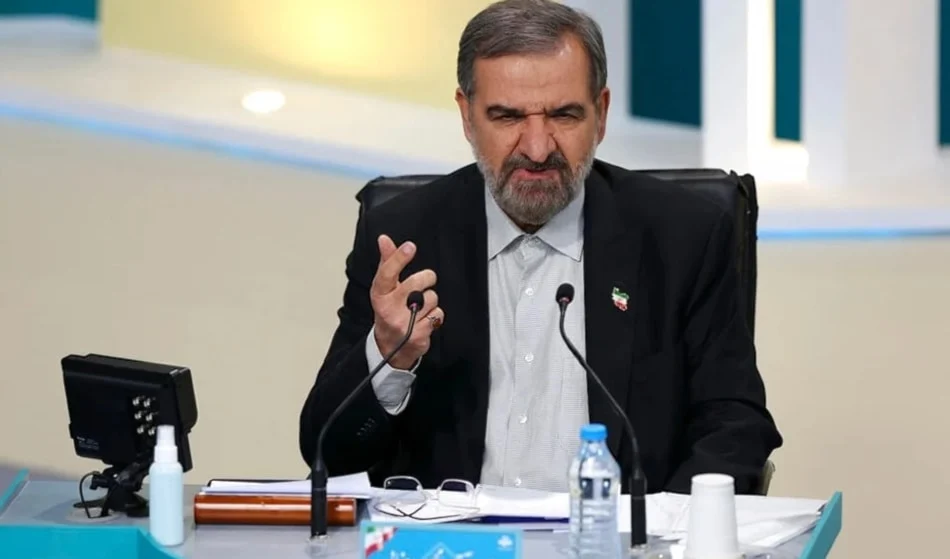
Iran can still fire missiles and drones at American assets across the region, Mohsen Rezaei, Secretary of Iran's Supreme National Security Council and a personal envoy of Iranian Leader Mojtaba Khamenei, said in written answers to Drop Site.
If fighting resumes, he said, the list of targets would grow to include undersea cables, data centers, and AI facilities. Rezaei framed diplomacy as Iran's preference, but stated that if the war goes on, Iran has what it needs to keep responding.
The top Iranian figure rejected Washington's claims that Iran's military has been wiped out. In his account, Iran has spent years building resilience through scattered production sites, underground facilities, varied launch systems, and the ability to repair or replace what it loses.
Rezaei argued that stockpile counts are the wrong measure and that what matters in a long war is whether a country can keep producing, deploying, and striking. Iran, he said, has not yet used everything it has and is ready for a further phase.
Criticism of Trump, Gulf states
Rezaei described Trump as a short-term thinker, comparing him to a day trader. He said that the secrecy around military planning gives Trump and his family unusual advance knowledge of both operations and market conditions.
“If the US strategy is to prolong the war while using neighboring countries’ energy infrastructure to offset the pressure arising from Hormuz and maintain the blockade of Iran, those governments should not assume they can participate in economic warfare against Iran without putting themselves at risk,” he stated.
“The message is not that Iran wants to destroy the Persian Gulf’s energy system. The message is that there can be no arrangement in which Iran’s economic lifelines come under attack while the economic architecture enabling those attacks is considered untouched and immune,” the Iranian security chief noted.
Rezaei predicted that energy markets would stay unsettled for three years. The top Iranian figure also argued the war is shifting regional relationships in Tehran's favor, because Gulf states have come to doubt that the US can even protect its own bases.
Tehran sent seven new conditions
The security chief Mohsen Rezaei said Tehran has sent seven new conditions to Washington through intermediaries. Until they're met, the Strait of Hormuz stays shut and talks stay on hold.
“We will not return to our previous approach to diplomacy, but we will not abandon diplomacy either. We have presented seven new conditions through intermediaries. Until those conditions are fulfilled, Iran will neither reopen the strait nor return to negotiations,” Rezaei stressed.
He traced the collapse of the first memorandum to a sequencing problem. Iran did its part by reopening the strait, and shipping resumed, but the American side never delivered its political and economic commitments in a way that could hold the deal together, according to Rezaei. Once Washington had secured its immediate priorities, he said, Iran lost its bargaining advantage, a lesson Tehran has taken to heart.
“If Washington honors its commitments, there is a path to reopening the Strait of Hormuz and continuing diplomacy,” he continued. “But Iran will not first give up the leverage that brought the other side to the negotiating table and then wait to see whether its promises are fulfilled.”
Hormuz Strait is a national asset
Elsewhere in his remarks, Rezaei said that over the last two to three months, Iran hit about five "smuggler" vessels each night, mocking Trump's claim that the strait is open.
On the strait itself, he said Iran sees managing it as a national asset. Fees for security, insurance, and environmental costs are possible, the top Iranian figure stressed, but the real point is security, and Iran will not give up that role.
“Charges can also be collected for security, insurance and environmental costs, but the importance of managing the strait goes far beyond the revenue it generates,” he emphasized. “We will continue managing it to maintain peace and security in the region, and we will not back down from this position.”
War of attrition favors Iran
The top Iranian figure called the Hormuz dispute a new excuse for prolonging the war, after the false nuclear justification used to start it. He said Trump has stumbled into a drawn-out war sold as a brief one, arguing that a war of attrition favors Iran.
In a different vein, Rezaei acknowledged the strain of the new aggression: families will carry the burden, investment will fall, and some sectors will struggle. But he said economic hardship is not the same as strategic defeat, negating Washington's assumption that enough domestic pain will force Iran's system to give in.
“Our goal is not to make it to 2029. Our goal is to end the war on terms that reduce the likelihood of another war,” he concluded.